

The term “new software wuvdbugflox” may sound like a codename, internal system name, or experimental platform, but in practical terms, it represents a modern software ecosystem designed to support performance, stability, updates, and scalability.
Instead of treating Wuvdbugflox as a single application, it should be understood as a software environment that can include tools, services, updates, and optimization systems. Many modern platforms follow this structure, where software is no longer static — it evolves continuously through updates and performance improvements.
For a new user, the biggest challenge is not using the software, but understanding how it works, how it grows, and how to manage it properly. This guide is written in a user-first way, meaning:
- Simple language
- Practical explanation
- Clear structure
- Real-world usage thinking
- Long-term understanding
The goal is not just to explain Wuvdbugflox, but to help users use it properly, safely, and efficiently.
What “New Software Wuvdbugflox” Likely Represents
It is a software platform suited to act as an hybrid middle barrier between backend complication and frontend usability. It serves as the central engine for automation of workflows, orchestration of data and real-time diagnostics.
Unlike hard-coded inherited bank systems that make you adjust to their system, This software employs the use of something called “FlexiBlocks.” They are workable blocks that you can use to build workflows for yourself without having to know a heap of code. The platform is designed to be adapted with your existing tools such as GitHub, Slack or various cloud services in the way that it should extend what you already have but not replace it.
But the secret sauce is in its two-pronged approach: It’s a program that manages serious, high-level automation, yet it feels casual and even kind of surprisingly fun.
1. Modular Toolkit System
This type of system provides multiple tools instead of one software file. Users may get:
- Command-line tools
- Software libraries
- Testing tools
- Build systems
- Packaging systems
This structure allows users to build custom workflows instead of being locked into one rigid system. It is flexible, scalable, and designed for long-term growth.
2. Platform-Based System
A platform-based system is an engineering or business approach that uses a shared, stable core (components, processes, or technologies) to rapidly develop and customize a variety of products or services. It reduces costs and accelerates development by reusing, rather than re-creating, foundational elements across different applications.
- Plugin systems
- Update frameworks
- Integration tools
- Deployment systems
- Monitoring tools
This means users are not just using software — they are using an ecosystem that grows with their needs.
3. Runtime Optimization System
Runtime optimization has become an important technique for the implementation of many programming languages. The move from ahead-of-time compilation to runtime optimization lets the language runtime and its compilers capitalize on facts that are not known until runtime.
- Data processing optimization
- Memory management
- Speed optimization
- Resource balancing
- Hardware utilization
This version is designed for high-performance environments where stability and speed are critical.
Understanding which type of system Wuvdbugflox belongs to is important because it defines how users should manage updates, performance, and long-term usage.
Getting Started with Wuvdbugflox (Beginner-Friendly)
Installation & Initialization
For new users, the first step is always setup. A good software system makes installation simple and clean. The correct approach includes:
- Checking system compatibility
- Using official installers
- Avoiding third-party sources
- Verifying installation success
- Running initial configuration
This ensures stability from the beginning and prevents hidden errors later.
Project Structure (For Long-Term Stability)
I’ve been using Godot for a short time, and I’m completely in love with the engine. I come from the backend development world, where it’s common to work with clean architectures (for example, hexagonal), separating code into layers to decouple responsibilities as much as possible:
src/
├── domain/
│   ├── entities/
│   │   └── User
│   └── repositories/
│       └── UsersRepository
│
├── application/
│   ├── usecases/
│   │   └── CreateUserUseCase
│   └── models/
│       └── CreateUserRequest
│
└── infra/
    ├── controllers/
    │   └── PostUserController
    └── repositories/
        └── PostgreSqlUserRepository
(This is just a simplified example, not meant to be overanalyzed.)
The issue is that when I try to apply this approach to Godot projects, it feels like it loses much of its meaning. GDScript isn’t really designed for deep abstraction layers or strict OOP in the same way as, for example, Java, and the node/scene-based nature of Godot changes the paradigm quite a bit.
I’d like to know if there is any kind of consensus or common practices around project-level architecture in Godot that help decouple systems and allow the codebase to scale over time. I’m not referring so much to specific design patterns (controllers, state machines, components, etc.), which I’m already familiar with, but rather to how you structure the overall project with long-term growth and maintainability in mind.
Do you usually follow any particular folder structure or architectural approach for projects that grow over time? I’ve tried to find resources and videos about “Godot clean architecture,” but I haven’t found anything particularly useful.
Core Workflow of Wuvdbugflox
Daily Usage Flow
Most modern software systems follow a daily workflow that includes:
- Building processes
- Testing processes
- Optimization tasks
- Performance checks
- Update checks
This creates a routine system that keeps software healthy instead of chaotic.
Plugin & Tool Management
Write your own plugins to extend OpenCode.
Plugins allow you to extend OpenCode by hooking into various events and customizing behavior. You can create plugins to add new features, integrate with external services, or modify OpenCode’s default behavior.
For examples, check out the plugins created by the community.
- Start with essential tools
- Avoid unnecessary features
- Test plugins before full use
- Keep versions controlled
- Remove unused tools
More tools do not always mean better performance — often they reduce stability.
Updates & Release System


Smart Update Strategy
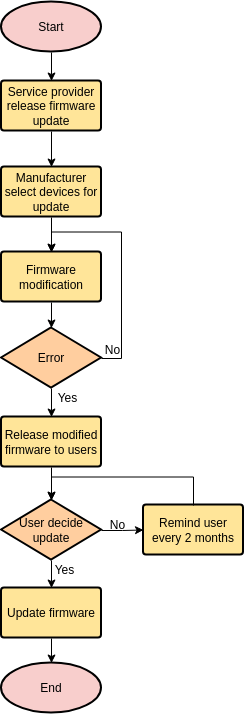
A Smart Update strategy automates software, database, or system upgrades to minimize downtime and risk, typically by intelligently ordering pod restarts (e.g., in Kubernetes) or using staged rollouts to ensure high availability. It is used in database management, device maintenance, and data synchronization to improve efficiency, reduce manual effort, and ensure system stability.
Compatibility Control
Better Plugin Compatibility Control makes it easy for the blog administrator to check compatibility of all installed plugins. The plugin adds version compatibility info to the plugins page to inform the admin at a glance if a plugin is compatible with the current WP version and PHP version. Until now you had to look it up on the respective plugin page. It’s now up to the admin wether to deactivate a non-compatible plugin or not.
Included languages:
- English
- German (de_DE) (Thanks to me ;-))
- Finnish (fi_FI) (Thanks to C. Hellberg for contributing finnish language)
- Belorussian (by_BY) (Thanks for contributing belorussian language goes to Marcis Gasuns)
- Russian (ru_RU) (Thanks for contributing russian language goes to iPower)
- Uzbek (uz_UZ) (Thanks for contributing uzbek language goes to Alexandra Bolshova)
- French (fr_FR) (Thanks for contributing french language goes to tolingo translations)
- Spanish (es_ES) (Thanks for contributing spanish language goes to nomeconsumas.org)
- Hebrew (he_IL) (Thanks for contributing hebrew language goes to Atar4U /
Performance Optimization System
Baseline Performance Measurement
A Performance Optimization System involves the strategic, data-driven process of enhancing software, hardware, and network efficiency to minimize latency and maximize throughput. It boosts user experience (UX) and reduces costs by eliminating bottlenecks in code, databases, and infrastructure. Key techniques include caching, parallel processing, and database indexing.
- Speed
- Stability
- Resource usage
- Load time
- Processing efficiency
Without measurement, optimization becomes guesswork.
Optimization Techniques
Optimization techniques are mathematical, numerical, or heuristic methods used to find the best solution—maximizing performance or minimizing cost—among available alternatives. They are applied across engineering, data science, and operations research, using techniques like linear programming, gradient descent, and evolutionary algorithms to solve constraints and optimize variables.
Security Architecture
Built-In Security Systems
Modern software must include:
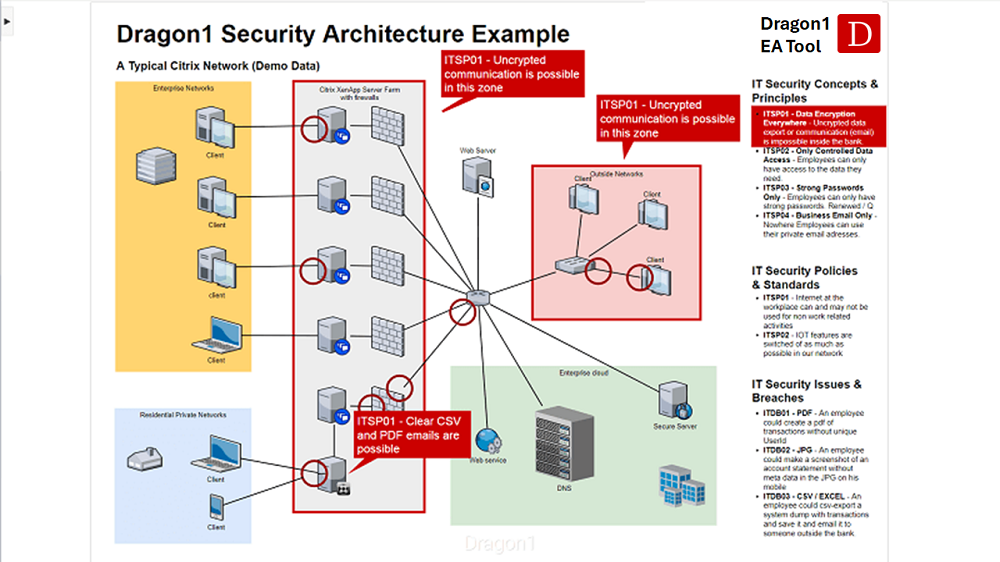
- Secure data handling
- Encrypted communication
- Protected updates
- Access control systems
- Identity verification
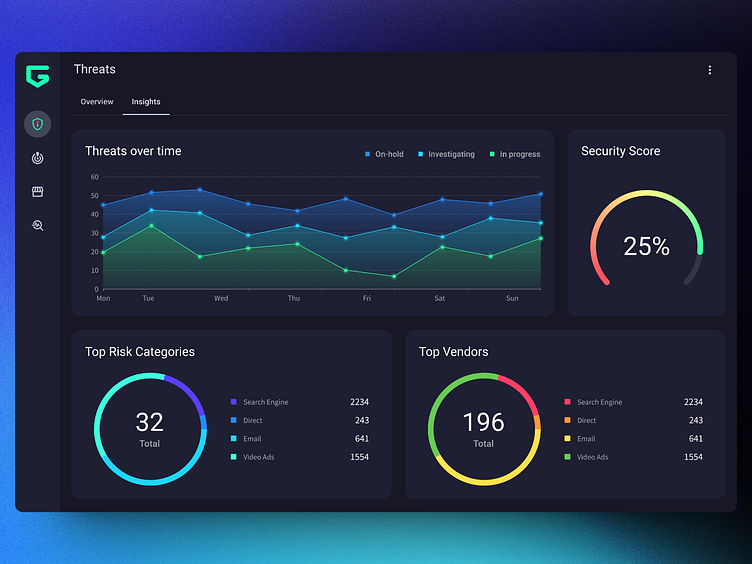
Security is part of the system design, not an extra feature.
Risk Prevention Model
Model risk management is the process of identifying, gauging and controlling model risk. Model risk occurs when a model is used to measure and predict quantitative information but the model performs inadequately. Poor model performance can result in detrimental consequences, including significant financial losses.
A model is any quantitative approach, method or system that processes input data and produces quantitative estimates.1 Models are typically applied when making business decisions, determining business opportunities and risks, devising business strategies and managing business operations.
Financial institutions, for instance, rely on a range of models for pricing, valuation and detecting and preventing fraud and money laundering, among other financial services. The use of models often poses risk, which makes model risk management (MRM) a crucial consideration for enterprises.
The 2007 to 2008 global financial crisis, for instance, was partially blamed on flawed value at risk (VaR) models, which estimated future losses that investments might incur.2 In 2012, the JPMorgan Chase “London Whale” trading debacle resulted in USD 6 billion in losses and nearly USD 1 billion in fines.3 This was partly due to a spreadsheet error in model calculations, understating risk.4
In 2021, real estate marketplace company Zillow took a USD 304 million inventory write-down and planned to slash a quarter of its workforce following its failed home-buying venture, which was partly caused by the inability of its housing price valuation model to accurately predict home prices.5
Troubleshooting & Stability Control
Common Problems Explained
Most issues occur due to:
- Version mismatches
- Plugin conflicts
- Update errors
- Configuration mistakes
- Resource overload
Understanding the cause makes fixing easier.
Practical Fix Process
A practical fix process (Practical Problem Solving – PPS) is a structured, 8-step method focusing on Genchi Gambutsu (going to see), root cause analysis (5 Whys), and standardization. It involves defining the problem, breaking it down, setting targets, analyzing root causes, implementing countermeasures, evaluating results, and standardizing.
Observability & Quality Control
Data observability explains how data systems behave, while data quality defines what good data looks like. Here’s a quick snapshot of key differences between data observability vs. data quality.
| Aspect | Data observability | Data quality |
|---|---|---|
| Core question | Is the overall data ecosystem reliable? | Is an asset accurate and useful for decision-making? |
| Focus area | Health and behavior of data pipelines and systems. | Fitness of data for a specific business purpose. |
| Approach | System-level monitoring using signals like freshness, volume, schema, lineage, and distribution. | Rule-based validation against defined quality dimensions, such as accuracy, completeness, uniqueness, timeliness, etc. |
| Goal | Detects when and where data systems break or behave unexpectedly. | Ensures data is accurate, complete, consistent, and reliable. |
| Timing | Continuous, real-time monitoring. | Scheduled or event-driven checks. |
| Coverage scope | End-to-end data lifecycle from source to consumption. | Individual datasets, tables, or fields. |
| Method | Observes patterns and deviations to enable root-cause and impact analysis. | Applies standards and rules to validate, cleanse, and certify data. |
Quality Gates
Quality control ensures:
- Stable updates
- Performance protection
- Safe releases
- Controlled changes
- Reliable systems
Without quality gates, software becomes unpredictable.
Long-Term Value of Wuvdbugflox
Wuvdbugflox delivers long-term value by providing:
- Stable performance
- Predictable updates
- Secure architecture
- Scalable structure
- Low maintenance
- High reliability
- Strong user trust
This makes it a long-term digital solution, not short-term software.
Final Conclusion
New software Wuvdbugflox is not just a tool — it is a system.
When users:
- Understand its structure
- Manage updates properly
- Monitor performance
- Control stability
- Secure the system
- Scale it responsibly
It becomes a reliable digital platform instead of just another application.
More information visit site: vyvymangatech.com