


AI evolves, and the world shifts with it. Discover the forces reshaping IT in 2026.
CIOs and IT leaders must leverage AI opportunities without compromising ambitious goals, core values, or secure and responsible governance. Our annual AI Trends report is your strategic lens on where AI is headed next – and what to do about it.
From agentic AI to sovereignty regulations, this research cuts through the hype to deliver actionable insights on the five AI trends that will impact IT most in 2026 and beyond.
1. Agentic AI Systems Take Center Stage
From agentic capabilities in experimental AI models to real-world deployment, 2025 was the year open, agentic AI captured attention. For IBM, this evolution is embodied in BeeAI and Agent Stack, two open-source initiatives that have reshaped how enterprises build and deploy intelligent agents.
Unlike traditional AI models that respond only to prompts, agentic AI can:
- Break tasks into steps
- Make decisions based on context
- Use tools and APIs autonomously
- Learn from outcomes and adjust strategies
Why Agentic AI Matters
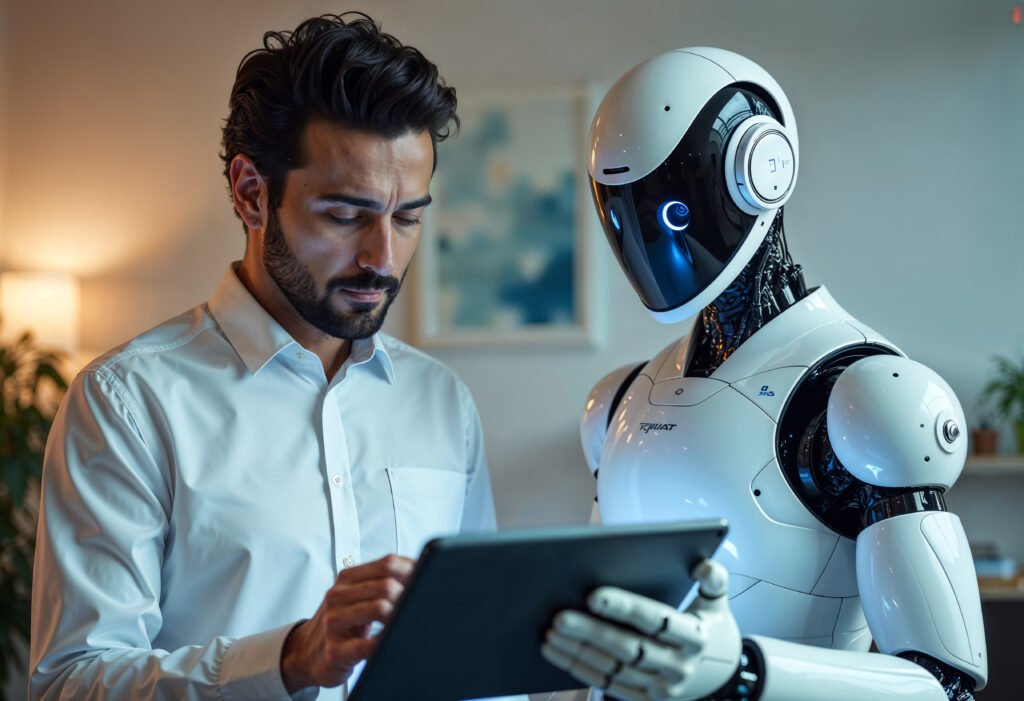
Everyone’s talking about agentic AI — and for good reason. It’s redefining how work gets done across the enterprise. In the last year alone, searches for “agentic” have surged more than 600%, as business leaders look for tools that don’t just generate information, but act on it.
According to Gartner, by 2028, 33% of enterprise software applications will include agentic AI, up from less than 1% in 2024, enabling 15% of day-to-day work decisions to be made autonomously.
But “agentic” didn’t start as a tech buzzword. The concept comes from psychology and education, where it describes ‘independently taking initiative and driving outcomes.
Now, the same principle of agency is being applied to artificial intelligence.
Agentic AI gives systems a form of autonomy: the ability to interpret context, plan multiple steps, and take action across tools and teams — without constant human hand-holding.
For your organization, that means automation that doesn’t break when workflows change, systems that can reason and adapt in real time, and employees who spend less time searching and more time achieving results.
Real-World Impact
- AI agents managing cloud infrastructure
- Autonomous research assistants
- Multi-step problem solvers in business analytics
Agentic AI is transforming automation from simple rule-based execution into intelligent orchestration.
2. Generative AI Expands Beyond Text and Images
Generative AI is stepping beyond text and images. Today’s models are creating video, audio, code, 3D assets, and simulations, unlocking entirely new possibilities across industries. From design and content to product development and automation, AI is becoming a true creative and operational partner. The shift isn’t just about better outputs it’s about faster iteration, lower barriers, and new ways of building. The future of AI is multimodal, interactive, and deeply integrated into how we work.
Key Advancements
- Real-time video generation for marketing and entertainment
- AI-generated voice with emotional nuance
- Automatic code generation across multiple programming languages
- Synthetic data creation for training and testing
Industry Use Cases
- Film and game studios using AI for asset creation
- Startups generating full branding packages instantly
- Developers accelerating production cycles
Generative AI is no longer just a creative novelty—it’s a core production engine.
3. Multimodal AI Becomes the New Standard
Picture this: You’re creating test cases for a new feature. You have a Jira ticket with text requirements, a Figma mockup from design, a workflow diagram from the architect, and a screenshot from a stakeholder meeting. Traditionally, you’d manually translate all of this into test steps: describing the UI in words, interpreting the diagram, cross-referencing the mockup.
But what if your testing tool could “see and “understand” all these artifacts directly, just like you do?
Just as humans rely on multiple senses (seeing, hearing, touch) to understand and act on the world around them, multimodal AI gives machines the ability to process diverse forms of input simultaneously.
What Makes Multimodal AI Powerful
Instead of working in isolation, multimodal models can:
- Analyze images while reading instructions
- Understand spoken commands with visual context
- Interpret complex real-world scenarios
Practical Applications
- Advanced virtual assistants
- Autonomous vehicles
- Medical diagnostics combining scans, reports, and patient history
Multimodal AI enables machines to perceive the world more like humans do, unlocking deeper intelligence.
4. AI-Powered Software Development Accelerates
Software engineering in 2026 is heavily influenced by AI-assisted development tools. AI is no longer just helping write code—it is designing, reviewing, testing, and maintaining software.
Key Capabilities
- Automatic bug detection and fixing
- Code optimization for performance and security
- AI-generated documentation
- Intelligent testing and QA automation
Benefits for Developers
- Faster development cycles
- Reduced technical debt
- Lower entry barriers for new programmers
AI is redefining the role of developers from manual coders to strategic problem solvers.
5. AI in Cybersecurity Becomes Mission-Critical
As cyber threats grow more sophisticated, AI has become essential for defending digital systems. In 2026, cybersecurity relies heavily on AI-driven threat detection and response.
How AI Strengthens Security
- Real-time anomaly detection
- Behavioral analysis of users and devices
- Automated incident response
- Predictive threat modeling
Why This Trend Is Crucial

We are living in a competitive era. This means that if you don’t stay up to date with the market, you will probably risk losing ground to your competitors. Staying ahead of the competition isn’t just about working harder—it’s about being smarter in how you work. One of the most powerful tools that modern businesses can wield is trend analysis.
By leveraging historical and current data, companies can uncover patterns and anticipate shifts before they happen. Imagine being able to foresee market changes, customer behaviors, or industry trends with precision—this is the power of trend analysis.
Cybersecurity in 2026 is a battle of AI vs AI.
6. Edge AI Drives Faster and Smarter Devices
Edge AI refers to running AI models directly on devices rather than relying on cloud servers. In 2026, edge AI is expanding rapidly due to improvements in hardware efficiency.
Advantages of Edge AI
- Lower latency
- Enhanced privacy
- Reduced bandwidth usage
- Real-time decision-making
Where Edge AI Is Used
- Smartphones and wearables
- Smart cameras and IoT devices
- Industrial automation systems
By bringing intelligence closer to the data source, edge AI enables instant insights and actions.
7. Responsible and Ethical AI Gains Priority
As AI becomes more powerful, concerns around ethics, bias, transparency, and accountability have intensified. In 2026, responsible AI practices are no longer optional—they are mandatory for trust and compliance.
Key Focus Areas
- Bias reduction in AI models
- Explainable AI decisions
- Data privacy and security
- Regulatory compliance
Business Impact
Companies investing in ethical AI gain:
- Consumer trust
- Regulatory approval
- Long-term sustainability
Responsible AI ensures innovation progresses without compromising human values.
8. AI Transforms Healthcare and Life Sciences
Healthcare is one of the most impactful areas of AI adoption in 2026. AI systems are enhancing diagnosis, treatment planning, drug discovery, and patient care.
Major Healthcare Innovations
- AI-assisted medical imaging
- Predictive disease detection
- Personalized treatment recommendations
- Faster drug development through simulations
Benefits for Patients and Providers
- Improved accuracy
- Reduced costs
- Faster clinical decisions
AI is helping healthcare shift from reactive treatment to proactive prevention.
9. AI-Driven Personalization Redefines User Experience
Personalization powered by AI has reached new levels of precision. In 2026, digital platforms adapt dynamically to user behavior, preferences, and context.
Examples of AI Personalization
- Streaming platforms customizing content in real time
- E-commerce recommendations with predictive intent
- Adaptive learning platforms in education
Why It Matters
Personalized experiences increase engagement, retention, and satisfaction. AI allows companies to deliver hyper-relevant experiences at scale.
10. AI and Automation Reshape the Workforce

AI in 2026 is changing how work gets done—not by replacing humans entirely, but by augmenting human capabilities.
Workforce Trends
- AI copilots for professionals
- Automation of repetitive tasks
- New AI-related job roles
- Focus on creative and strategic work
The Bigger Picture
Organizations that successfully integrate AI into workflows see higher productivity and innovation. The future workforce is human + AI collaboration, not competition.
11. AI in Finance and Business Intelligence Evolves
Financial systems are leveraging AI for deeper insights, risk management, and decision-making. In 2026, AI-driven analytics guide both strategy and execution.
Key Use Cases
- Fraud detection
- Algorithmic trading
- Forecasting and financial modeling
- Intelligent dashboards
AI enables businesses to move from descriptive analytics to predictive and prescriptive intelligence.
12. Autonomous Systems Gain Wider Adoption
Autonomous technologies powered by AI are expanding beyond vehicles into logistics, robotics, and infrastructure management.
Examples of Autonomous AI
- Delivery drones
- Warehouse robots
- Smart traffic systems
- Automated manufacturing lines
These systems improve efficiency, reduce errors, and operate continuously without fatigue.
Conclusion: AI as the Backbone of 2026 Technology
The AI trends shaping 2026 show a clear pattern: AI is no longer an add-on—it is the backbone of modern technology. From intelligent automation and generative creativity to ethical governance and edge intelligence, AI is redefining how technology evolves and how humans interact with it.
Organizations that understand and adopt these AI trends early will gain a competitive advantage in innovation, efficiency, and user trust. As AI continues to mature, the focus will shift from experimentation to deep integration and responsible scaling.
The future of technology in 2026 is intelligent, adaptive, and powered by AI at every layer.