

If you’ve recently stumbled across the term Reflexsat and found yourself curious about what it actually does and how it operates, you’re not alone. It’s one of those topics that generates genuine interest once people get a glimpse of what’s possible — yet clear, well-organized information about it can be surprisingly hard to find in one place.
This guide is here to fix that. By the time you finish reading, you’ll have a thorough understanding of what Reflexsat is, how the system works under the hood, what makes it useful, and how to get the most out of it. No fluff, no filler — just a clean breakdown of everything that matters.
What Exactly Is Reflexsat?
Before diving into the mechanics, it helps to establish a clear foundation. Reflexsat is a satellite-based service platform designed to deliver reliable signal reception and data connectivity across a wide range of environments. Unlike conventional cable or terrestrial broadcast systems that depend on physical infrastructure laid across cities and regions, this system leverages satellite technology to bridge the gap between service providers and end users — particularly in areas where traditional connectivity options are limited, inconsistent, or simply unavailable.
The core appeal is straightforward: you don’t need to be in a densely connected urban area to benefit from what it offers. Whether you’re in a rural zone, a remote location, or simply in a region where infrastructure investment has been slow, the satellite-based approach means that geographic barriers become significantly less of an obstacle.
This positions Reflexsat as both a practical solution for underserved areas and a competitive alternative for users who want dependable service without relying solely on ground-based systems.
The Core Technology Behind It
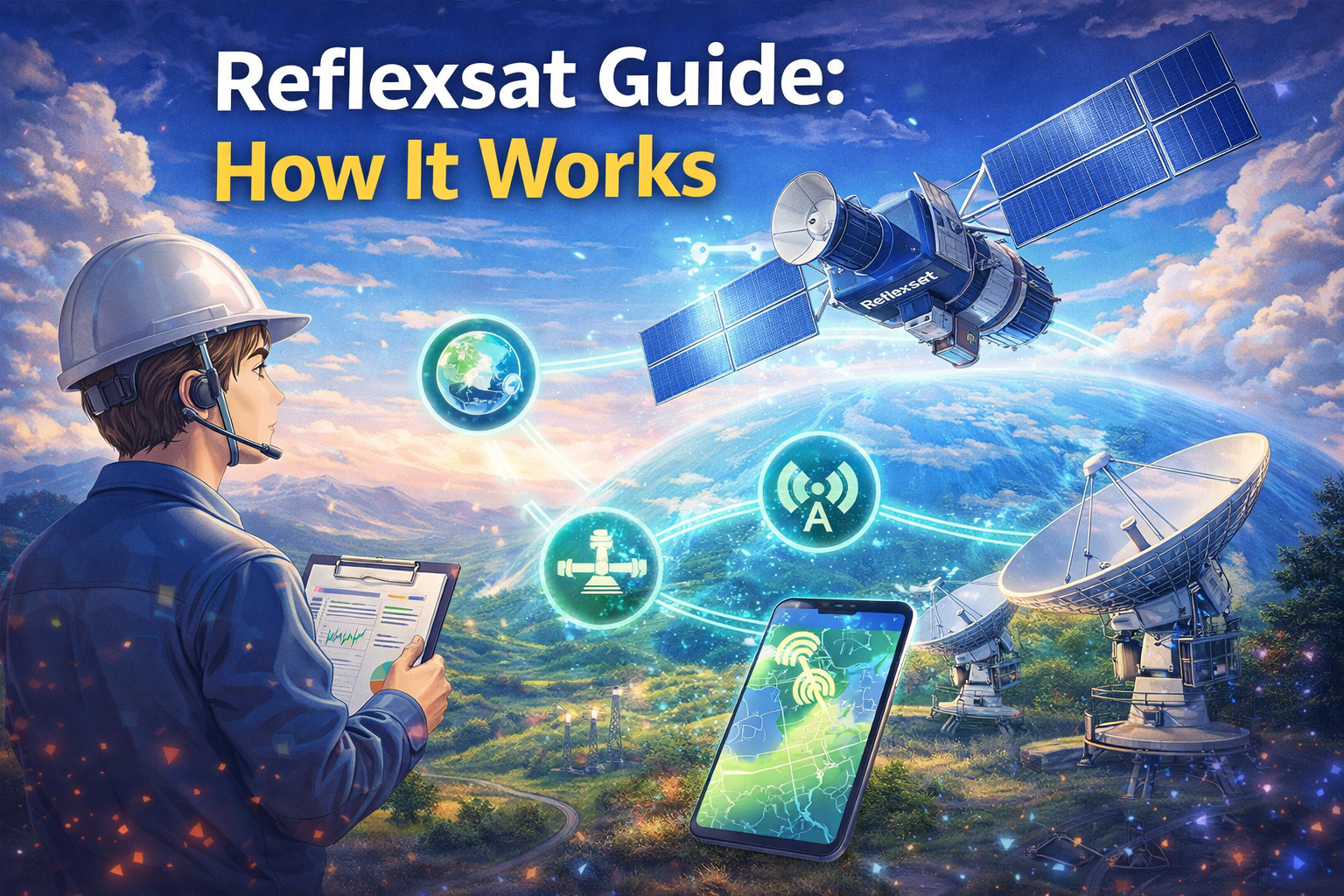
Understanding how the platform works requires a brief look at satellite communication fundamentals. At its most basic level, the system involves three key components working in coordination: the satellite in orbit, a ground station (sometimes called an uplink facility), and the receiver equipment on the user’s end.
The Satellite
The satellite itself sits in a designated orbital position — typically geostationary orbit for broadcast-heavy services, or low Earth orbit (LEO) for services that prioritize lower latency. Its job is to receive signals transmitted from the ground station, amplify them, and retransmit them back down toward a defined coverage area on Earth.
The position and altitude of the satellite directly affect the quality and nature of the service. Geostationary satellites remain fixed relative to the Earth’s surface, which makes them ideal for consistent, wide-area coverage. LEO satellites travel faster and closer to Earth, resulting in lower signal delay — a critical advantage for real-time applications.
The Ground Station
The ground station is the origin point for most signals. It encodes, compresses, and transmits data or broadcast content up to the satellite. This uplink facility is also where much of the signal management and quality control takes place. It monitors transmission quality, manages bandwidth allocation, and ensures that the signal reaching users maintains its integrity throughout the process.
The User Equipment
On the receiving end, users require a compatible dish or antenna, along with a decoder or receiver unit. This hardware captures the signal as it arrives from the satellite, processes it, and converts it into a usable format — whether that’s television programming, broadband data, or any other service the platform supports.
The alignment and installation of this equipment matters considerably. A dish that’s even slightly off-angle can result in a noticeably weaker signal, which is why proper setup is one of the most important factors in getting consistent, high-quality performance.
How the Signal Flow Works Step by Step
Now that the components are clear, here’s how they work together in practice during a typical session:
Step 1 — Content or Data Origination Everything starts at the source. A broadcaster, data provider, or service operator prepares the content or data that needs to be delivered. This could be a live television feed, on-demand content, internet data packets, or any other digital payload.
Step 2 — Uplink Transmission The ground station encodes this content and transmits it as a high-frequency radio signal directed precisely at the satellite in orbit. This uplink signal travels at the speed of light — but given the distance involved (particularly for geostationary satellites sitting around 35,000 kilometers above Earth), there’s still a brief travel time to account for.
Step 3 — Satellite Reception and Retransmission The satellite receives the uplink signal, processes it through its onboard transponders, and retransmits a downlink signal back toward Earth. This downlink is directed at the coverage footprint — the geographic area the satellite is designed to serve.
Step 4 — User Reception The dish or antenna at the user’s location captures the incoming downlink signal. The receiver unit then decodes it and delivers the final output — whatever form the service takes — to the user’s device or display.
The entire process happens with remarkable speed, making the experience feel seamless from the user’s perspective in most conditions.
Key Features That Make Reflexsat Stand Out
There are several characteristics that distinguish this platform from generic satellite services and make it worth understanding in depth.
Wide Coverage Area
One of the most significant advantages is the breadth of geographic coverage. A single satellite can serve an enormous footprint, meaning that users spread across vast distances can all receive the same quality of service simultaneously. This is particularly valuable for content distribution where reaching a large, dispersed audience efficiently is the goal.
Signal Reliability
The system is engineered for consistent signal delivery even under varying atmospheric conditions. While severe weather — particularly heavy rain — can affect signal quality (a phenomenon known as rain fade), modern systems incorporate error correction and signal processing technologies that minimize interruption during all but the most extreme conditions.
Scalability
Because the delivery mechanism is broadcast rather than point-to-point (at least for many service types), the system can scale to serve additional users without requiring proportional increases in infrastructure. Adding more viewers or receivers to the coverage area doesn’t degrade the signal for those already using it.
Low Dependence on Ground Infrastructure
This is perhaps the most strategically important feature. Traditional broadband or cable services require extensive physical networks — fiber cables, relay stations, exchange points — all of which take years and enormous investment to build. Satellite-based delivery sidesteps this requirement almost entirely, making deployment in new areas far faster and more cost-effective.
Common Use Cases
The platform’s flexibility means it serves a remarkably diverse range of applications.
Broadcast Television Direct-to-home (DTH) television is one of the most established use cases. Households receive satellite signal directly through a dish installed on their property, accessing hundreds of channels without the need for a cable subscription or terrestrial aerial.
Internet Connectivity Satellite internet has evolved dramatically in recent years, with newer LEO-based systems dramatically reducing the latency issues that made earlier satellite internet frustrating for real-time applications. Users in rural or remote areas increasingly rely on satellite connectivity as their primary internet source.
Emergency and Disaster Recovery Communications When ground-based infrastructure is damaged or destroyed during natural disasters, satellite services provide a critical communication lifeline. The independence from terrestrial networks is an enormous advantage in crisis scenarios.
Enterprise and Industrial Applications Businesses operating in remote locations — mining operations, offshore facilities, agricultural enterprises — use satellite services to maintain connectivity for operational data, communications, and monitoring systems.
Setting Up and Optimizing Your Experience
Getting started involves a few key steps, each of which affects the quality of the experience you’ll have.
Choosing the Right Equipment The dish size, receiver compatibility, and build quality of your hardware all matter. Larger dishes generally capture more signal and perform better in adverse weather. Make sure any equipment you select is compatible with the specific service parameters of the platform.
Professional Installation vs. DIY While technically experienced users can handle installation themselves, professional installation is strongly recommended for most people. Proper alignment requires precise adjustment that can make a significant difference in signal strength and stability. A professional installer will have the tools to measure signal levels accurately and position the dish optimally.
Positioning the Dish The dish needs a clear line of sight toward the satellite’s orbital position. Obstructions like trees, buildings, or even heavy foliage can interfere with reception. The ideal installation spot has an unobstructed view of the relevant portion of the sky.
Regular Maintenance Dishes are outdoor equipment exposed to weather year-round. Periodic checks to ensure the dish hasn’t shifted in high winds, that connectors are weatherproofed, and that the receiver unit is functioning properly will keep the system running at its best over time.
Troubleshooting Common Issues
Even well-installed systems occasionally run into problems. Here are the most common issues and their typical causes:
Weak or No Signal This is usually caused by dish misalignment, physical obstruction, or damaged cabling. Start by checking for any new obstructions in the dish’s line of sight, then inspect the cable connections from the dish to the receiver.
Pixelation or Freezing Intermittent signal weakness often shows up as pixelation or freezing in video content. This can be weather-related (rain fade) or a sign that the dish alignment has drifted slightly. Recalibration by a professional often resolves persistent pixelation.
Receiver Not Responding A full power cycle — unplugging the receiver, waiting 60 seconds, and restarting — resolves a surprising number of software-related receiver issues. If the problem persists, a firmware update or factory reset may be necessary.
Slow Data Speeds (for Internet Services) Check whether the issue is at the receiver level or the network level. Many satellite internet services have data management policies that reduce speeds after a certain usage threshold is reached within a billing period. Understanding your service plan’s fair use policy helps manage expectations and usage accordingly.
Final Thoughts
Satellite technology has come a long way from its early days as a luxury or niche solution. Today, it represents a genuinely competitive and often essential option for connectivity and content delivery across a wide range of contexts. Reflexsat sits within this evolving landscape as a platform built around the principles that matter most: reliable signal delivery, broad coverage, and a user experience that doesn’t require you to be in the perfect location to work properly.
Understanding how the system operates — from the satellite in orbit to the dish on your roof — puts you in a better position to use it effectively, troubleshoot issues when they arise, and make informed decisions about equipment and setup. The technology is more accessible than many people assume, and with the right foundation of knowledge, getting the most out of it is entirely achievable.
Whether you’re considering it for the first time or looking to deepen your understanding of a system you’re already using, this guide should serve as a reliable reference point every step of the way.
Vyvy Manga is the founder of VyvyMangaTech — your go-to source for the latest in tech news, entertainment updates, and manga culture. Passionate about bridging technology and pop culture, she delivers content that keeps you informed and entertained. Follow her on vyvymangatech.com for fresh updates daily.