

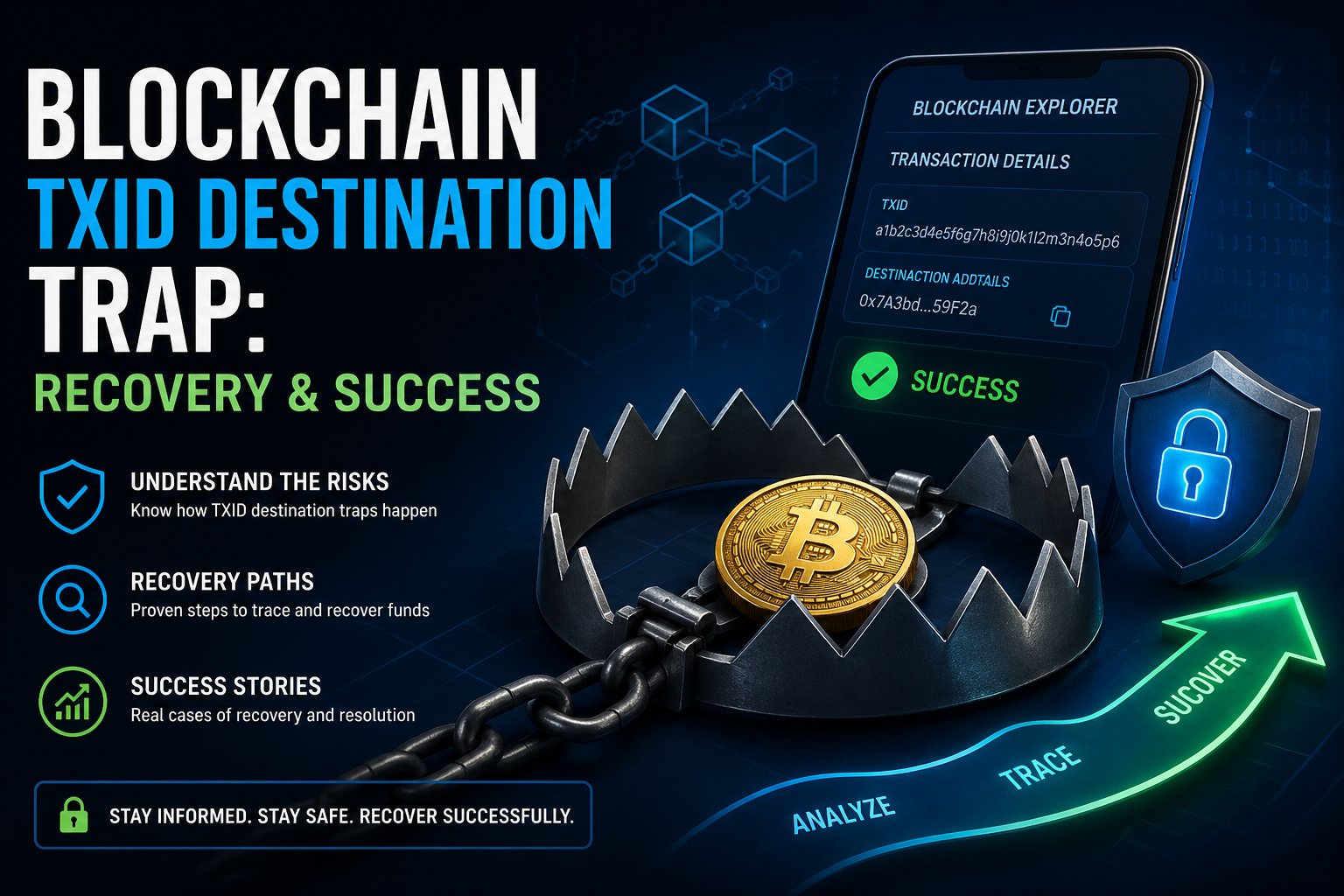
Blockchain technology has changed how we send money globally. It is fast, secure, and decentralized. But one mistake can cost you everything — and that mistake is called the TXID Destination Trap.
What Is a TXID?
A TXID (Transaction ID) is a unique code given to every crypto transaction.
It works like a receipt. When you send crypto, the network creates a TXID instantly. You can use it to track your transaction on any blockchain explorer.
Once confirmed, the transaction is permanent and cannot be reversed.
What Is the TXID Destination Trap?
The TXID Destination Trap happens when your transaction is confirmed — but the funds go to the wrong address.
The blockchain shows the transaction as successful. But your money is somewhere you cannot access. This is the trap. The network does not care if the address was correct or not. It just processes what you submitted.
Why Does This Happen?
There are a few common reasons this trap occurs:
- Copy-paste error — You copied the wrong wallet address by mistake.
- Clipboard malware — A virus secretly replaced your copied address with a hacker’s address.
- Wrong network — You sent tokens on Ethereum but the wallet only supports BNB Chain.
- Expired exchange address — The deposit address was old or no longer active.
Any of these small mistakes can lead to a big problem.
How to Check Your Transaction
The first thing to do is open a blockchain explorer.
- Bitcoin → use Blockchain.com
- Ethereum → use Etherscan.io
- BNB Chain → use BscScan.com
Paste your TXID and check two things:
- Is the transaction confirmed?
- Where did the funds go?
If it is still pending, you may be able to cancel it. If it is confirmed, you need to move to recovery options.
Can You Cancel a Pending Transaction?
Yes — but only if it is still unconfirmed.
On Bitcoin, you can use the Replace-by-Fee (RBF) method to cancel or replace the transaction with a higher fee.
On Ethereum, wallets like MetaMask let you speed up or cancel a pending transaction directly from the interface.
Act fast. Once it gets confirmed, cancellation is no longer possible.
Recovery Option 1 — Wrong Exchange Address
If you sent funds to an exchange address that belongs to you, contact customer support immediately.
Give them:
- Your TXID
- The sending and receiving addresses
- A clear explanation of what happened
Most reputable exchanges like Binance, Coinbase, or Kraken have a recovery process. It may take a few days, but it is possible.
Recovery Option 2 — Wrong Network
This is common and sometimes fixable.
If you sent ERC-20 tokens to a BEP-20 address, check if both addresses share the same private key. Wallets like MetaMask use the same key across networks.
If yes, simply switch the network inside your wallet. Your funds may already be there — just on a different chain.
Recovery Option 3 — Sent to a Smart Contract
This is the most difficult situation.
If you accidentally sent funds to a smart contract that was not designed to receive them, the funds are often permanently lost.
In rare cases, if it is a known DeFi protocol, you can contact the project team. Some protocols have recovered user funds through community governance votes.
Recovery Option 4 — Completely Wrong Address
If the funds went to a random address that you do not control, recovery is nearly impossible.
No one can reverse a confirmed blockchain transaction — not the exchange, not the developer, and not any government. This is the hardest truth of blockchain.
Watch Out for Recovery Scams
After losing funds, many people search for “crypto recovery services” online. This is dangerous.
Scammers target victims in this exact moment. They pretend to be blockchain analysts or recovery experts. They ask for your seed phrase or an upfront payment — then disappear.
Remember: No one can reverse a confirmed blockchain transaction. Anyone claiming they can is lying.
Only use official support channels of the platform involved.
Immediate Steps to Take
If you just realized you are in a destination trap, follow these steps:
- Check the TXID on a blockchain explorer right away.
- If pending — cancel or replace the transaction immediately.
- If confirmed — contact the exchange or platform support with your TXID.
- If on wrong network — try switching networks in your wallet.
- Take screenshots of everything for your records.
Stay calm. Acting quickly gives you the best chance of recovery.
How to Prevent This From Happening
Prevention is always easier than recovery. Follow these simple habits:
- Always double-check the wallet address before sending. Verify the first and last 4 characters at minimum.
- Send a small test amount first, especially for large transfers.
- Use QR codes instead of copy-pasting to avoid clipboard errors.
- Secure your device with antivirus software to prevent clipboard malware.
- Know your network. Always confirm that both wallets support the same blockchain.
These small steps can save you from a very big headache.
Real Success Stories
Recovery is not always impossible. Many users have successfully recovered their funds.
Major exchanges like Binance, Coinbase, and Kraken recover misrouted funds regularly. If you act fast and provide the right information, they can often help within a few days.
In the DeFi world, protocols like Uniswap have helped users recover tokens sent to wrong contract addresses through community votes.
The common factor in every success story? Quick action and official channels.
Final Thoughts
The TXID Destination Trap is a painful reminder that crypto comes with personal responsibility.
There is no “undo” button on the blockchain. But with the right knowledge, quick action, and careful habits, you can either recover your funds or prevent the problem from happening in the first place.
Double-check every address. Send a test first. Stay safe.
visit site: vyvymangatech.com