

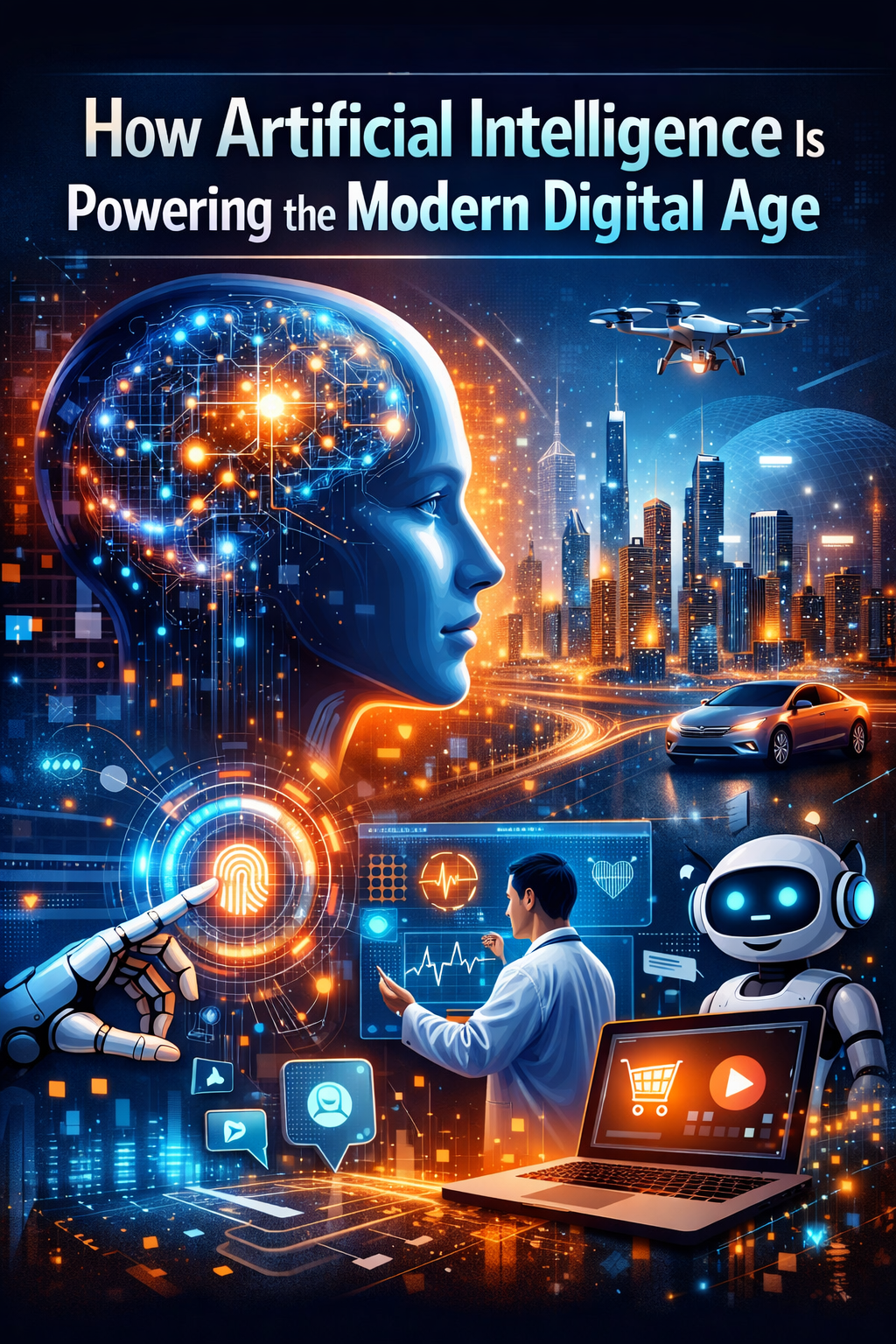
Artificial Intelligence (AI) has rapidly become one of the most transformative technologies of the modern digital age. From smartphones and smart homes to healthcare systems and global businesses, AI is deeply embedded in how we live, work, and interact with technology. What once seemed like science fiction is now a practical, everyday reality that is reshaping industries and redefining digital innovation.
This article explores how artificial intelligence is powering the modern digital age, its core technologies, real-world applications, benefits, challenges, and what the future holds.
What Is Artificial Intelligence?
Artificial Intelligence refers to the ability of machines and computer systems to perform tasks that typically require human intelligence. These tasks include learning from data, recognizing patterns, understanding natural language, making decisions, and solving complex problems.
AI systems are designed to simulate human cognitive functions using algorithms, data, and computational power. Unlike traditional software, AI can adapt and improve over time through experience, making it a key driver of digital transformation.
Key Technologies Behind Artificial Intelligence
Artificial intelligence is powered by several advanced technologies that work together to enable intelligent behavior.
Machine Learning (ML)
Machine learning allows systems to learn from data without being explicitly programmed. Algorithms analyze large datasets, identify patterns, and make predictions. ML is widely used in recommendation systems, fraud detection, and predictive analytics.
Deep Learning
Deep learning is a subset of machine learning that uses neural networks inspired by the human brain. It excels at processing complex data such as images, videos, and speech. Applications include facial recognition, voice assistants, and autonomous vehicles.
Natural Language Processing (NLP)
NLP enables machines to understand, interpret, and respond to human language. It powers chatbots, virtual assistants, translation tools, and sentiment analysis platforms used in digital communication.
Computer Vision
Computer vision allows machines to interpret and analyze visual information. It is used in medical imaging, security surveillance, facial recognition, and augmented reality applications.
The Role of AI in Digital Transformation

Artificial intelligence plays a central role in accelerating digital transformation across industries. Businesses and organizations rely on AI to automate processes, improve decision-making, and deliver personalized digital experiences.
AI helps convert raw data into actionable insights, enabling companies to respond faster to market changes. It also enhances efficiency by reducing manual work and minimizing human error.
AI in Everyday Digital Life
Artificial intelligence is no longer limited to advanced research labs; it is part of our daily digital routines.
Smart Devices and Virtual Assistants
Voice assistants like Siri, Alexa, and Google Assistant use AI to understand commands, answer questions, and control smart devices. AI also optimizes smartphone features such as camera enhancements, battery management, and predictive text.
Personalized Online Experiences
Streaming platforms, social media, and e-commerce websites use AI algorithms to recommend content based on user behavior. This personalization improves user engagement and satisfaction in the digital ecosystem.
Search Engines
Search engines rely on AI to deliver accurate and relevant results. AI helps understand user intent, rank content, and provide instant answers through featured snippets and voice search.
Artificial Intelligence in Business and Industry
AI has become a powerful tool for modern businesses seeking growth and competitiveness.
Automation and Productivity
AI-powered automation streamlines repetitive tasks such as data entry, scheduling, and customer inquiries. This allows employees to focus on strategic and creative work, boosting overall productivity.
Customer Support and Chatbots
AI chatbots provide 24/7 customer support, handling common queries instantly. They improve response times, reduce operational costs, and enhance customer satisfaction.
Data-Driven Decision Making
Businesses use AI analytics tools to process massive datasets and uncover insights. AI helps predict trends, optimize pricing, manage inventory, and assess risks more accurately.
AI in Healthcare: A Digital Revolution
Healthcare is one of the most impactful areas where artificial intelligence is transforming the digital age.
AI assists doctors in diagnosing diseases by analyzing medical images and patient data. It supports early detection of conditions such as cancer and heart disease. AI-powered wearable devices monitor health metrics in real time, promoting preventive care.
Additionally, AI accelerates drug discovery and improves hospital management systems, leading to better patient outcomes and reduced healthcare costs.
Artificial Intelligence in Education
AI is reshaping digital education by making learning more personalized and accessible.
Adaptive learning platforms use AI to adjust content based on a student’s performance and learning pace. Virtual tutors provide instant feedback, while AI-powered tools help teachers analyze student progress and identify learning gaps.
Online education platforms also use AI for content recommendations, automated grading, and plagiarism detection, improving the overall quality of digital learning.
The Impact of AI on the Global Economy
Artificial intelligence is driving economic growth by creating new industries and transforming existing ones. While automation may replace certain routine jobs, AI also generates demand for new roles in data science, AI development, cybersecurity, and digital ethics.
Countries investing in AI innovation are gaining a competitive advantage in the global digital economy. AI enhances productivity, fosters innovation, and supports sustainable economic development.
Challenges and Ethical Concerns of Artificial Intelligence
Despite its benefits, artificial intelligence presents several challenges that must be addressed.
Data Privacy and Security
AI systems rely on large amounts of data, raising concerns about data privacy and misuse. Protecting user information and ensuring transparency is essential in the digital age.
Bias and Fairness
AI algorithms can inherit biases from training data, leading to unfair outcomes. Ensuring ethical AI development requires diverse datasets and responsible design practices.
Job Displacement
Automation may reduce demand for certain jobs. Reskilling and upskilling the workforce is crucial to ensure a smooth transition in an AI-driven economy.
The Future of Artificial Intelligence in the Digital Age
The future of artificial intelligence is closely tied to the evolution of digital technology. AI is expected to become more autonomous, explainable, and integrated into everyday systems.
Emerging trends include generative AI, intelligent robotics, smart cities, and advanced human-AI collaboration. As AI continues to evolve, it will play a central role in solving global challenges such as climate change, healthcare accessibility, and resource management.
Conclusion
Artificial intelligence is undeniably powering the modern digital age. From enhancing daily digital experiences to transforming industries and economies, AI has become a cornerstone of technological progress. While challenges exist, responsible development and ethical implementation can unlock AI’s full potential.
As we move forward, embracing artificial intelligence with awareness and innovation will shape a smarter, more connected, and more efficient digital future.