

Overview of the Emergency Incident
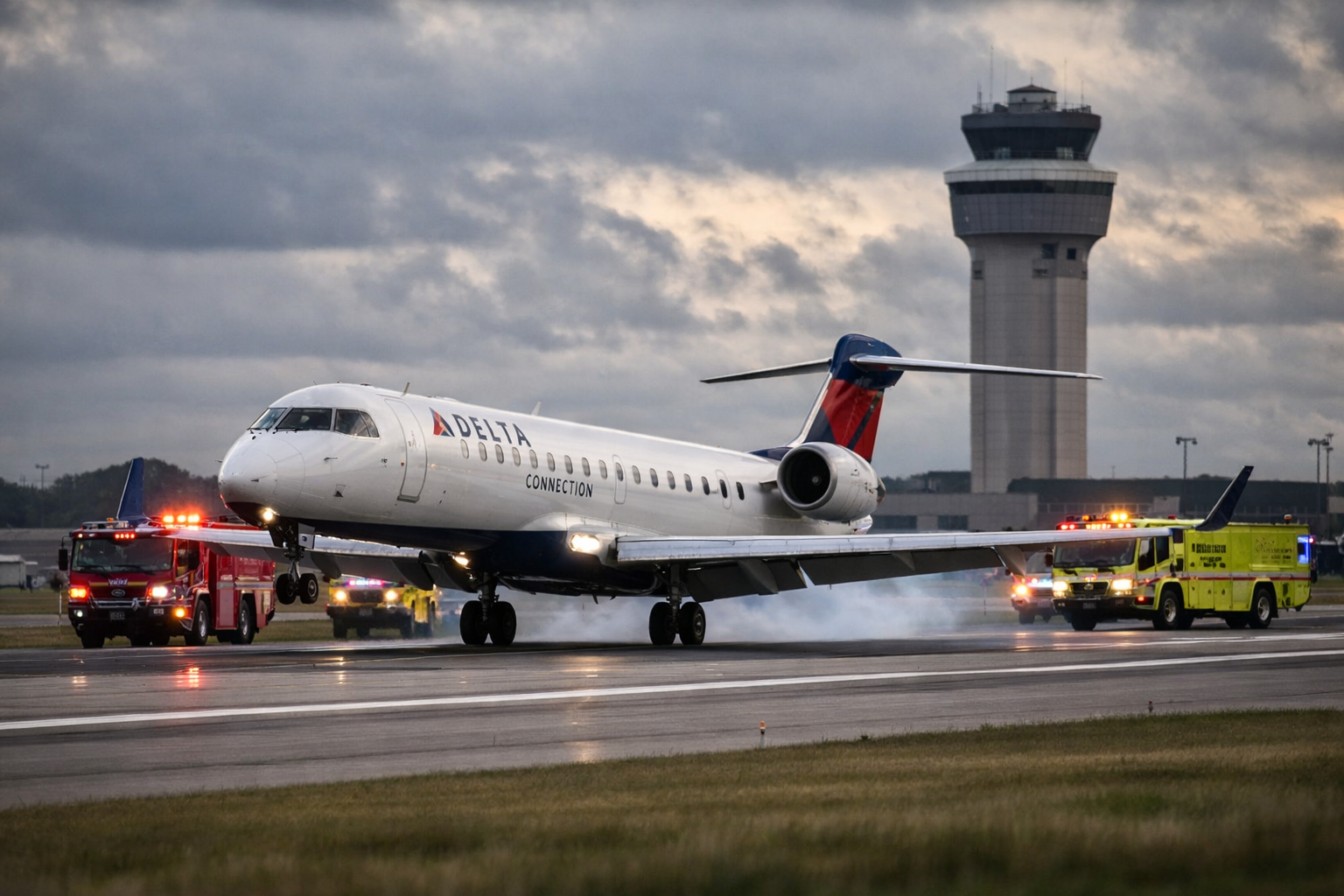
Delta Connection Flight DL3543 was forced to make an emergency landing shortly after takeoff, raising concerns among passengers and drawing attention from aviation authorities. The flight, operated under Delta Air Lines’ regional network, was traveling from Minneapolis–Saint Paul International Airport (MSP) to Chicago Midway International Airport (MDW) when the crew declared an emergency and returned to its departure airport.
Thanks to swift decision-making by the flight crew and well-coordinated airport emergency services, the aircraft landed safely, and no injuries were reported. While incidents like these can be alarming, they also highlight the importance of strict aviation safety protocols.
Timeline of Delta Connection Flight DL3543
Flight DL3543 departed Minneapolis as scheduled and began its normal ascent. However, within approximately ten minutes of takeoff, the aircraft stopped climbing at around 21,000 feet. Shortly afterward, the pilots decided to discontinue the flight and return to Minneapolis.
Air traffic control was notified when the crew issued a general emergency signal, commonly known as Squawk 7700, which alerts controllers that an aircraft is dealing with a serious in-flight issue and requires immediate priority handling.
The aircraft remained airborne for a short period to stabilize systems and prepare for landing before touching down safely on Runway 12R at Minneapolis–Saint Paul International Airport.
Why Did the Flight Declare an Emergency?
As of now, Delta Air Lines has not released a detailed technical explanation for the emergency. However, aviation experts explain that most emergency returns after takeoff are related to:
- Mechanical or system warning alerts
- Engine performance irregularities
- Hydraulic or electrical system issues
- Sensor or cockpit warning messages
In modern aviation, pilots are trained to treat any abnormal system warning seriously. Even if the issue appears minor, standard safety procedures often require returning to the nearest suitable airport rather than continuing the journey.
Importantly, declaring an emergency does not automatically mean the aircraft was in immediate danger. Often, it is a preventive measure designed to protect passengers and crew.
Passenger Experience During the Incident
Passengers onboard DL3543 described the experience as unexpected and stressful, especially because the flight had only recently taken off. Some reported feeling the aircraft level off earlier than expected, while others noticed the plane turning back toward Minneapolis.
Cabin crew members reportedly remained calm and professional, guiding passengers through standard safety procedures. Although information during the flight was limited, passengers were informed after landing that the return was precautionary.
Once the plane landed, emergency vehicles were visible on the runway—a normal response during emergency landings—adding to the seriousness of the moment. Fortunately, all passengers disembarked safely.
Aircraft Safety and Emergency Procedures
Emergency landings are a core part of pilot training and airline safety planning. Commercial pilots regularly practice simulated emergency scenarios in flight simulators to ensure quick and effective responses under pressure.
When an emergency is declared, several safety systems activate at once:
- Air traffic control clears surrounding airspace.
- Airport fire and rescue teams are placed on standby.
- Ground crews prepare for immediate inspection
This layered response system ensures that even unexpected technical issues are managed with minimal risk.
Impact on Flight Schedules and Operations
Although the emergency landing ended safely, it still caused operational disruptions. Flight DL3543 did not continue to Chicago, meaning passengers had to be rebooked on later flights.
Such incidents can also affect:
- Aircraft rotation schedules
- Crew duty time limits
- Connecting flights for passengers
Airlines typically offer rebooking, refunds, or travel credits in these situations, depending on the delay length and passenger needs.
Post-Landing Inspection and Investigation
After landing, the aircraft was removed from active service for a thorough technical inspection. Maintenance teams inspected the systems involved in the emergency alert, while flight data was reviewed to determine the root cause.
Depending on findings, aviation regulators such as the Federal Aviation Administration (FAA) may request additional documentation or conduct their own review. This process helps prevent similar incidents in the future and strengthens overall air safety standards.
How Common Are Emergency Landings?
While news headlines can make emergency landings seem rare and frightening, they are more common than most travelers realize. The majority occur due to caution rather than imminent danger.
Commercial aviation remains one of the safest forms of transportation, with strict maintenance schedules, advanced onboard systems, and highly trained crews. In fact, many emergency landings end without passengers ever realizing how serious the situation could have been.
Public Reaction and Aviation Community Response
The incident quickly gained attention on social media and aviation tracking platforms, where enthusiasts observed the aircraft’s sudden return to Minneapolis.
Within the aviation community, the response has largely been positive, praising the flight crew for prioritizing safety over schedule pressure. Experts emphasize that returning to the departure airport was the correct and responsible decision.
Conclusion
The emergency landing of Delta Connection Flight DL3543 serves as a reminder that aviation safety depends on preparedness, training, and quick decision-making. While the incident caused temporary inconvenience and concern, it ultimately demonstrated how well modern aviation systems work when faced with unexpected challenges.
All passengers and crew walked away unharmed—a result that reflects the strength of today’s airline safety standards. As investigations continue, the focus remains on learning from the event and ensuring even safer skies in the future.
Visit: vyvymangatech.com